

Treatment for High FSH Levels in Females: A Complete Guide for Women
If you're concerned about your fertility or starting to notice changes in your cycle, understanding your hormone levels is an important first step.
One hormone that plays a key role is follicle-stimulating hormone, or FSH. When FSH levels are high, it can point to changes in how your ovaries are working.
Unilab Health offers comprehensive at home testing for high FSH levels in females that gives you clear insights into your hormone levels from the comfort of your home.
KEY SUMMARY
- High FSH means your ovaries aren't responding well to your brain's hormonal signals.
- Imbalanced FSH can affect fertility and indicate declining ovarian reserve.
- You can't directly lower FSH back to normal, but you can manage symptoms and address underlying causes.
- Testing FSH is done through blood samples and at-home blood testing kits which makes tracking your hormone levels convenient and accessible.
- Understanding your FSH levels helps you make informed decisions about your reproductive health.
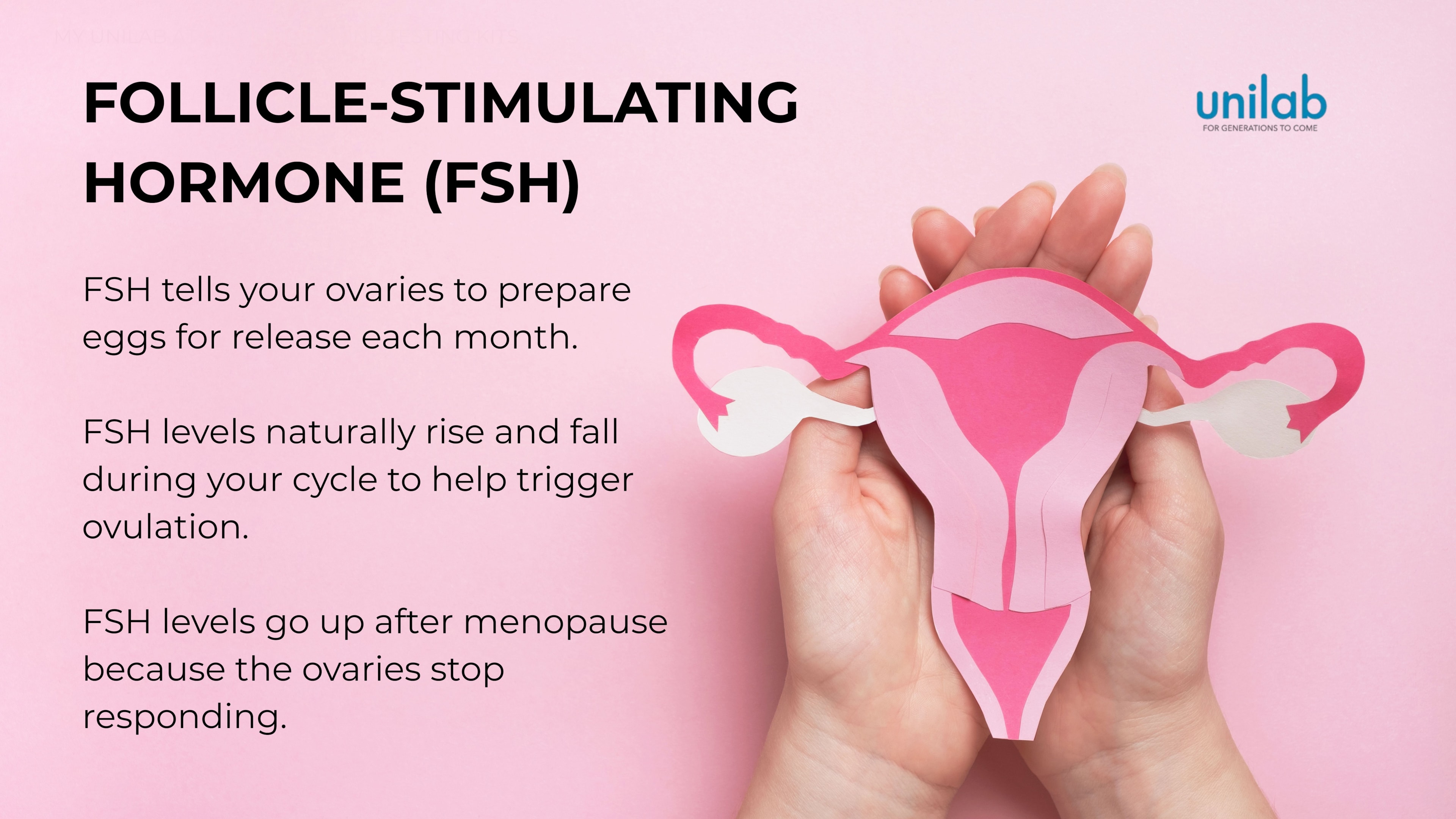
Understanding Follicle Stimulating Hormone: What FSH Function Does in Your Body
High FSH can raise questions about your ability to get pregnant or signal that your body is shifting toward a new phase. That can feel stressful. But the good news is, you can get clarity. Testing your hormone levels at home makes it easier to get the information you need without waiting for a clinic appointment.
How FSH Works in the Body
Your pituitary gland releases FSH as part of your reproductive system’s communication network. This release is triggered by gonadotropin releasing hormone (GnRH) from the hypothalamus, which signals the pituitary to secrete FSH and LH.
Have you just read that and thought, what does that all mean?
Well, we have you covered. Think of FSH as a manager sending emails to employees.
When the employees respond and do their work (your ovaries producing estrogen and maturing eggs), the manager sends fewer emails. But when employees stop responding, the manager sends more and more emails trying to get a response.
That’s what happens with high FSH levels: your pituitary gland keeps releasing more FSH because your ovaries aren’t responding the way they used to.
FSH and Ovarian Follicle Development
FSH stimulates the growth of ovarian follicles during your menstrual cycle, and these follicles contain your eggs. FSH acts on granulosa cells within the follicles, stimulating them to support follicle development and produce estrogen.
FSH, Estrogen, and Ovulation
As the follicles mature, they produce estrogen. When estrogen levels rise enough, your body releases luteinizing hormone, triggering ovulation. This whole process depends on a delicate balance between your pituitary gland, your ovaries, and your reproductive hormones.
Normal FSH Levels in Females
Understanding normal FSH ranges helps you know where you stand:
- Before puberty: 0 to 4.0 mIU/mL
- During puberty: 0.3 to 10.0 mIU/mL
- After puberty: 4.7 to 21.5 mIU/mL
- After menopause: 25.8 to 134.8 mIU/mL
Data adapted from Cleveland Clinic
These values represent the normal range for FSH levels in females.
How FSH is Measured During the Menstrual Cycle
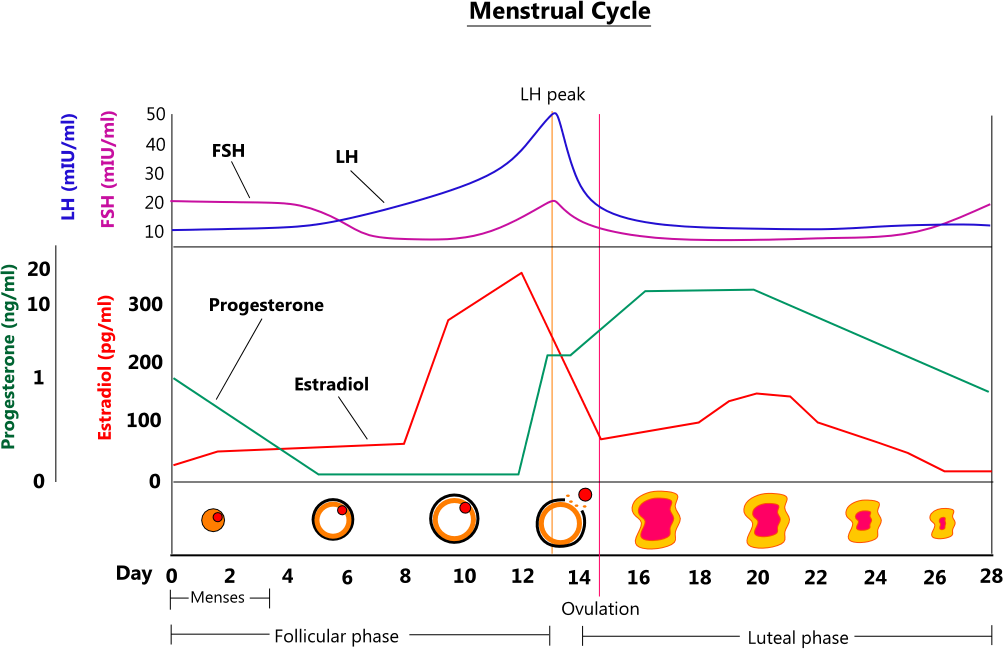
Image Source: Straight Healthcare- Female Hormone Health
Your FSH levels also fluctuate throughout your menstrual cycle.
During the follicular phase (the first half of your cycle), levels stay relatively low. They spike with a sudden surge right before ovulation, then drop again in the luteal phase. This pattern repeats each cycle when everything functions properly.
Doctors measure FSH levels at specific times in the menstrual cycle to assess ovarian function and reproductive health.
A single FSH blood test doesn’t tell the whole story. Doctors typically order testing on day 3 of your menstrual cycle to get the most accurate baseline reading.
This timing matters because it shows how hard your pituitary gland works at the start of each cycle to recruit follicles and prepare for your next menstrual cycle.
FSH tests are typically performed alongside estradiol levels and anti-müllerian hormone (AMH) tests to provide a more complete picture of ovarian reserve and hormone balance.
What Causes High FSH Levels
Several factors can push your FSH levels higher than normal ranges. Let's talk about the most common causes first, then we'll cover some less frequent but important ones.
Common Causes
Menopause and Perimenopause
As your ovarian reserve naturally declines with age, your ovaries produce less estrogen.
Your pituitary gland responds by releasing more FSH, trying to stimulate those remaining follicles.
This happens gradually during perimenopause, which can start in your 40s or even late 30s for some women.
By the time you reach menopause (12 months without menstrual periods), your FSH levels rise significantly.
Premature Ovarian Insufficiency (POI)
Premature ovarian failure happens when your ovaries stop functioning normally before age 40.
Your body still tries to stimulate your ovaries by releasing high amounts of FSH, but the ovaries can’t respond.
Women with POI experience symptoms similar to menopause: hot flashes, vaginal dryness, and irregular periods or no periods at all.
Polycystic Ovary Syndrome (PCOS)
While PCOS typically involves other hormone imbalances, some women with this condition also show elevated FSH levels.
PCOS affects how your ovaries function, leading to irregular ovulation and difficulty conceiving.
Women with PCOS often have enlarged ovaries with multiple small follicles that don’t mature properly.
The failure to develop a mature follicle can prevent ovulation and contribute to fertility challenges.
If you suspect PCOS, My Unilab offers a comprehensive Women’s PCOS Panel that tests multiple reproductive hormones.
Other Less Common Causes
Less common but important causes of high FSH levels include:
- Ovarian tumors that disrupt normal hormone production
- Chromosomal abnormalities like Turner syndrome affecting ovarian development
- Damage to reproductive organs from chemotherapy or radiation therapy
- Pituitary gland tumors (rare condition where the tumor produces excess FSH)
- Autoimmune disease attacking ovarian tissue
- Extreme exercise combined with very low body fat disrupting hormonal balance

What Does High FSH Indicate for Your Health
When your FSH test comes back showing elevated levels, it typically indicates one of several things about your reproductive function. Below are health issues we commonly see across different areas of the body in women who have high FSH levels at critical periods in their lives.
What High FSH Means in Women of Childbearing Age
For women of childbearing age, high FSH often signals diminished ovarian reserve.
This means you have fewer eggs remaining than expected for your age.
In contrast, a normal FSH level generally suggests that your ovaries are functioning properly and that your ovarian reserve is within a healthy range for your age.
Why the Pituitary Gland Increases FSH
Your ovaries respond less vigorously to FSH stimulation, so your pituitary gland compensates by producing more.
Elevated FSH levels can make conception more challenging because you may have fewer eggs or poor quality eggs available.
FSH and Fertility Treatment Outcomes
Many fertility treatments become less effective when FSH levels stay consistently high, and in vitro fertilization success rates often show lower pregnancy rates with higher FSH levels. Having high FSH doesn’t mean pregnancy becomes impossible. It just means you may need different approaches or additional support.
High FSH Level Symptoms: What Elevated FSH Feels Like
The symptoms you experience with elevated FSH depend largely on what’s causing the increase.
In children, unusually high levels of FSH may lead to early puberty.
In most other cases, abnormal FSH levels are associated with hypogonadism, which happens when the sex glands produce very few or no sex hormones.
When FSH levels are lower than normal, the problem usually starts in the hypothalamus or pituitary gland.
This is known as hypogonadotropic hypogonadism, where these areas of the brain do not release enough hormones to stimulate the ovaries.
This can result in delayed or missing puberty and problems with fertility.
On the other hand, high FSH levels often suggest that the issue comes from the reproductive organs.
If the ovaries are not making enough sex hormones, the pituitary gland reacts by producing more FSH in an effort to boost hormone production.
Source: Cleveland Clinic Follicle-Stimulating Hormone (FSH)
Symptoms vary by age and may include:
In biological female children:
- Absent breast development during puberty
- No menstruation (amenorrhea) or delayed menstruation
- Lack of growth spurt during puberty
- Delayed puberty overall
In biological adult females:
- Loss of interest in sex
- Fatigue and low energy
- Infertility, likely due to issues with ovulation
- Hot flashes and night sweats
- Irregular menstruation or no menstrual periods
- Losing pubic hair or body hair
- Vaginal dryness
- Sleep disturbances

FSH and Menstrual Cycle
Follicle stimulating hormone (FSH) is at the heart of your menstrual cycle, orchestrating the early stages that set the stage for ovulation and potential pregnancy.
Each month, during the follicular phase, the first half of your menstrual cycle, FSH stimulates the growth and development of ovarian follicles.
These follicles each contain an immature egg, and as they mature under the influence of follicle stimulating hormone FSH, they begin to produce increasing amounts of estrogen.
As estrogen levels rise, your body prepares for ovulation.
This surge in estrogen signals the pituitary gland to release a burst of luteinizing hormone (LH), which, together with a peak in FSH levels, triggers the release of a mature egg from the ovary.
Natural Decrease of FSH Levels After Ovulation
After ovulation, FSH levels naturally decrease, and the now-empty follicle transforms into a structure that produces progesterone.
This hormone helps thicken the uterine lining, making it ready for a potential pregnancy.
When FSH levels are out of balance, it can disrupt this finely tuned process, leading to irregular periods or challenges with ovulation.
Balanced FSH Improves Reproductive Health
Understanding how FSH plays a role in each phase of your menstrual cycle is key to maintaining reproductive health and identifying issues early- especially if you’re experiencing symptoms like irregular periods or difficulty conceiving.
FSH Blood Test: What Blood Test Measures FSH Levels
An FSH (follicle-stimulating hormone) test is a blood test that measures the level of FSH in your bloodstream.
The test is performed by drawing a blood sample.
It is typically done alongside other hormone tests to help assess reproductive health or identify possible hormonal imbalances.
Other hormone tests often include:
- Luteinizing hormone (LH)
- Testosterone
- Estradiol and progesterone levels
- Anti-Müllerian hormone (AMH)
In general, these tests can help determine the cause of infertility, diagnose conditions associated with dysfunction of the ovaries, and aid in the diagnosis of pituitary or hypothalamus conditions that affect FSH production.
For adult women, FSH blood tests can provide information for the investigation of menstrual irregularities (irregular periods) and predicting when or if they're entering menopause.
At Home Blood Testing for Ovarian Reserves
Unilab Health makes hormone testing incredibly convenient. Our Ovarian Reserve Panel provides comprehensive testing that includes Follicle-Stimulating Hormone (FSH), Luteinizing hormone (LH), Anti-Mullerian Hormone (AMH) and Estradiol.
For women tracking their reproductive health over time, regular testing helps you see trends and make proactive decisions.
Our goal at Unilab is to ensure you don't need to wait for a doctor's referral, take time off work, or shuffle your life around for lab appointments.
Treatment for High FSH Levels in Females
A tough truth that frustrates many women is that you can't directly lower FSH levels back to normal ranges in most cases.
Treatment focuses on addressing the underlying cause and managing symptoms rather than forcing FSH numbers down.
There are many different approaches that can assist. Let's take a look at them below.
Lifestyle Modifications
Many women see improvements in their hormone levels through lifestyle changes:
- Maintain a healthy body weight to balance reproductive hormones (both being significantly underweight and carrying excess weight affect FSH production and ovarian function)
- Reduce stress through meditation, yoga, or other relaxation techniques (chronic stress affects your hypothalamus and pituitary gland, potentially influencing FSH release)
- Get adequate sleep for hormone regulation (aim for seven to nine hours of quality sleep each night)
- Moderate extreme exercise if you're overdoing it (while regular physical activity supports overall health, excessive training combined with low body fat can disrupt reproductive hormones)
- Eat a nutrient-dense diet rich in antioxidants, healthy fats, and protein to support egg quality and overall reproductive health
Some women find supplements like CoQ10, vitamin D, and omega-3 fatty acids helpful, however, we advise you to always discuss any supplements with your healthcare provider.

Hormone Replacement Therapy and Estrogen Therapy
For women experiencing uncomfortable symptoms like hot flashes or vaginal dryness, hormone replacement can provide relief.
Estrogen therapy helps manage these symptoms, though it doesn't restore fertility or lower FSH levels.
Your doctor might prescribe estrogen alone or combined with progesterone, depending on whether you still have your uterus.
Hormone therapy comes in various forms: pills, patches, creams, or vaginal rings. The goal focuses on symptom management and maintaining bone health, not reversing the underlying ovarian changes.
Fertility Treatments and Medications
Women trying to conceive with high FSH can face many daunting challenges, one being that standard fertility medications may not work as effectively when FSH levels stay elevated.
Each case is unique and your fertility specialist might adjust medication protocols or suggest different approaches according to your unique physiology.
Vitro Fertilization (IVF)
In vitro fertilization remains an option, though success rates typically decrease as FSH levels rise and successful pregnancy becomes more challenging.
Your doctor may recommend more aggressive stimulation protocols or suggest considering donor eggs.
Intrauterine Insemination (IUI) and Ovulation Prediction for Intercourse
Some women with premature ovarian failure still have occasional ovulation.
Careful monitoring and well-timed intercourse or IUI (intrauterine insemination) might achieve pregnancy during these windows.
The fallopian tube plays a crucial role in this process by transporting the egg from the ovary to the uterus, and it is also the site where fertilization typically occurs.

Treating Underlying Conditions
When high FSH stems from a specific condition, treating that condition becomes the priority:
- Pituitary tumors or pituitary disorder: May require medication or surgery to remove the growth and restore normal hormone production
- Autoimmune conditions: Might respond to immunosuppressive therapy, though this doesn't always reverse ovarian damage
- Turner syndrome or chromosomal disorder: Typically needs specialized care from reproductive endocrinologists
- PCOS management: Often involves medications like metformin to improve insulin sensitivity and regulate cycles, plus weight management and dietary changes
Regular Monitoring and Menopause Testing
Regardless of which treatment path you choose, ongoing monitoring of your hormone levels helps track changes and guide decisions.
Testing your FSH and other reproductive hormones every few months lets you see trends rather than relying on a single snapshot.
Understanding your hormone levels empowers you to make decisions aligned with your goals, whether that means pursuing fertility treatments, managing symptoms, or planning for the future.
When to See a Healthcare Provider
You should talk to your GP doctor if you experience any symptoms suggesting hormone imbalances.
- Persistent irregular periods
- Losing your period all together
- Hot flushes and/ or night sweats
- Severe mood swings
- Sleep disturbances
- Vaginal dryness
- Difficulty conceiving after six months of trying (over 35 y/o) or a year (under 35 y/o)
- Menopausal symptoms before age 40 all warrant evaluation
Don't hesitate to seek a second opinion if you feel your concerns aren't being taken seriously.
Reproductive health significantly impacts your quality of life and deserves thorough attention.
Fertility specialists or reproductive endocrinologists have specific expertise in managing complex hormone issues and can offer more targeted treatment approaches.
Taking Your Health Into Your Own Hands
It can be frustrating to wait for appointments or answers when you have questions about your body.
At-home hormone testing makes understanding your reproductive health simple and accessible. Checking key hormones from home gives you access to clarity and confidence in making decisions about fertility that empower your overall well-being.
Don't wait for someone to pay attention to your concerns.
- Feel empowered in knowing what's happening in your body
- Take control of your health and stop waiting in uncertainty
- Gain true peace of mind when you understand your unique hormone level better.
- Feel confident in your decisions
- Support yourself by continuously tracking trends
Choosing Unilab Health At Home Female Hormone Testing kits
Unilab Health’s comprehensive at-home testing for high FSH levels in females puts valuable health data directly in your hands.
With over 37 years of experience as a trusted partner in reproductive health, we've chosen to make hormone testing accessible to everyone.
Take back your power and stay informed about our hormone levels from the comfort of your home.
Frequently Asked Questions
What are considered normal levels of FSH in females, and why are they important?
Normal levels of FSH vary with age and cycle stage, typically 4.7 to 21.5 mIU/mL in reproductive years. This important hormone regulates sexual development, egg growth, and ovulation. Abnormal levels can signal early puberty, premature menopause, or ovarian dysfunction.
FSH: Units mIU/mL
- Follicular Phase: 3.5 - 9.0
- Mid-cycle: 7.0 - 22.0
- Luteal Phase: 2.0 - 10.0
- Oral Contraceptive: < 5.0
- Postmenopausal: > 15.0
What happens if I have low FSH levels?
Low FSH levels often mean the pituitary or hypothalamus isn’t stimulating the ovaries properly, known as hypogonadotropic hypogonadism. This can delay sexual development, cause irregular periods, and affect fertility. Treating the root cause helps restore normal levels and hormonal balance.
Can high FSH levels affect males?
Yes. In men, FSH is an important hormone for sperm production. Abnormal levels may cause a low sperm count or testicular dysfunction. Low FSH levels can also disrupt puberty and testosterone balance, so hormone testing is key for diagnosis and treatment.
What causes abnormal FSH levels and how do they relate to fertility?
Abnormal levels may result from premature menopause, ovarian failure, PCOS, or pituitary issues. When FSH stays high, the ovaries respond poorly, leading to reduced egg quality. Balanced hormones and early treatment support fertility and restore normal levels.
How can high FSH levels be treated or managed?
There’s no direct way to lower FSH, but treatment focuses on causes. Lifestyle changes, hormone therapy, or fertility treatments like IVF can help. Managing stress, nutrition, and hypogonadotropic hypogonadism supports normal levels and reproductive health.