

Frequently Asked Questions
Understand Our Tests
Why is AMH testing important for women?
Who benefits most from an AMH test?
How does AMH inform IVF or egg freezing decisions?
Can AMH predict my ability to get pregnant?
What should I do with my AMH results?
Trusted by 1,000+ Clinics. Over 400+ Happy Customers.
Let customers speak for us
Got this as a gift for my wife who is getting into health and fitness. This was a game changer. We saw where she was difficient and she plans to update here diet and vitman regiment to compensate. Looking forward to good health moving forward and another test in a few months. Thank you Unilab!

I was a bit nervous at first about doing a blood test myself, but it turned out to be incredibly simple and I hardly felt the prick at all! The instructions were clear and easy to follow, making the whole process stress-free. Highly recommend for its ease of use and helpful guidance!

Did not have high expectations as I’ve done a test like this before, but when I received the kit, the process was so smooth and easy I was so surprised. Received my results a lot sooner than expected and would highly recommend this to anyone who’s on or starting their fertility journey.
Easy to use, fast results, and worth the price. I highly recommend getting this test for all men.

This was such and easy and simple process. I order this test online and it arrived by the 3rd day. Followed the instructions which were supper easy, sent it back with the prepaid envelope provided. I received my results as promised such a quick turnaround. I highly recommend this test for sure!!!
User friendly. Received quickly and obtained results in a timely matter.
Honestly, I was highly impressed with Unilab. The process was smooth from start to finish. The kit arrived as packaged, with clear instructions, and collecting the sample was super simple. The only thing you felt was a bit of a pinch, but nothing uncomfortable and definitely worth the convenience. Would definitely recommend for anyone looking to get this done.
Easy to use device and received my results way faster than expected.

How It Works
-

Purchase Test
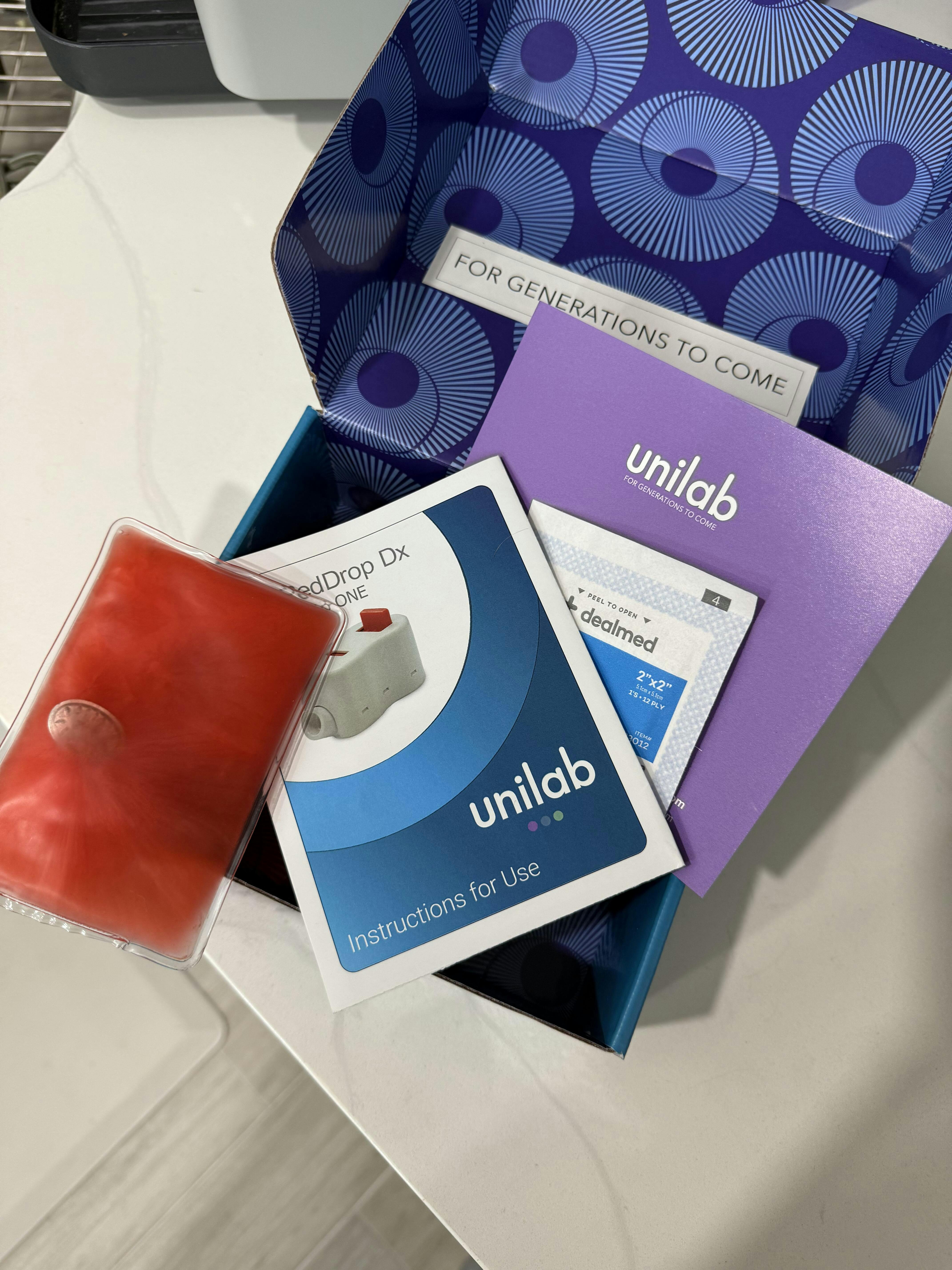
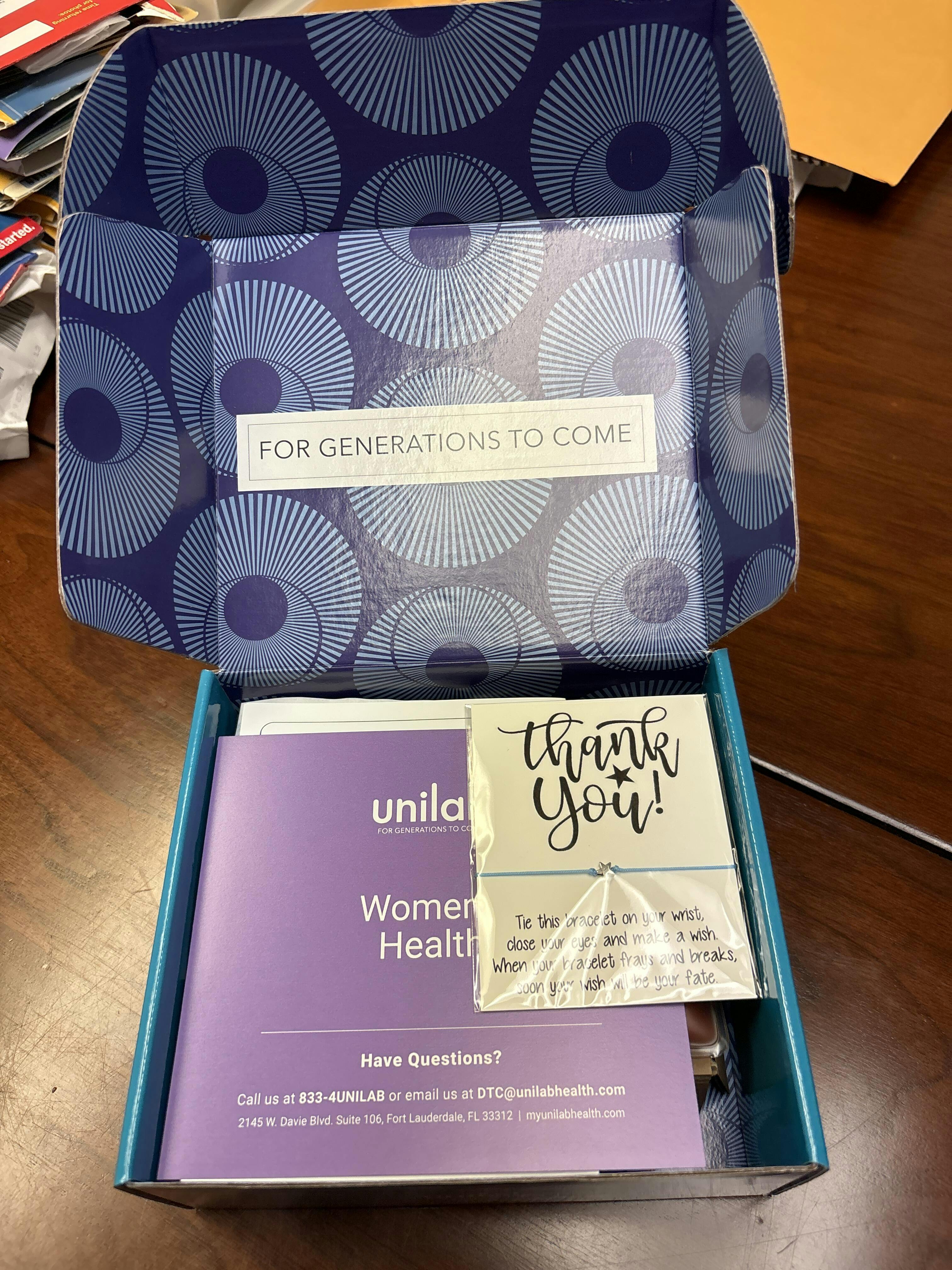
Place your order online. A medical professional will review your order. Expect to receive your kit in 2-3 days once we have completed your order.
-

Register Kit
When you receive your kit, be sure to follow the included instructions to register. This ensures your sample is processed accurately and without delay.
-

Collect Your Sample
Follow the instructions that came with your kit to collect your sample. Send your sample back to Unilab using the prepaid envelope.
-

Review Your Results
For most tests, results are ready 3-4 days days from receiving your sample. You will receive a notification when your test results are ready.


Your Results
- Self-administered blood collection
- Simple to use and painless
- Blood samples sent and tested at Unilab Laboratory
- Results in 3-4 days